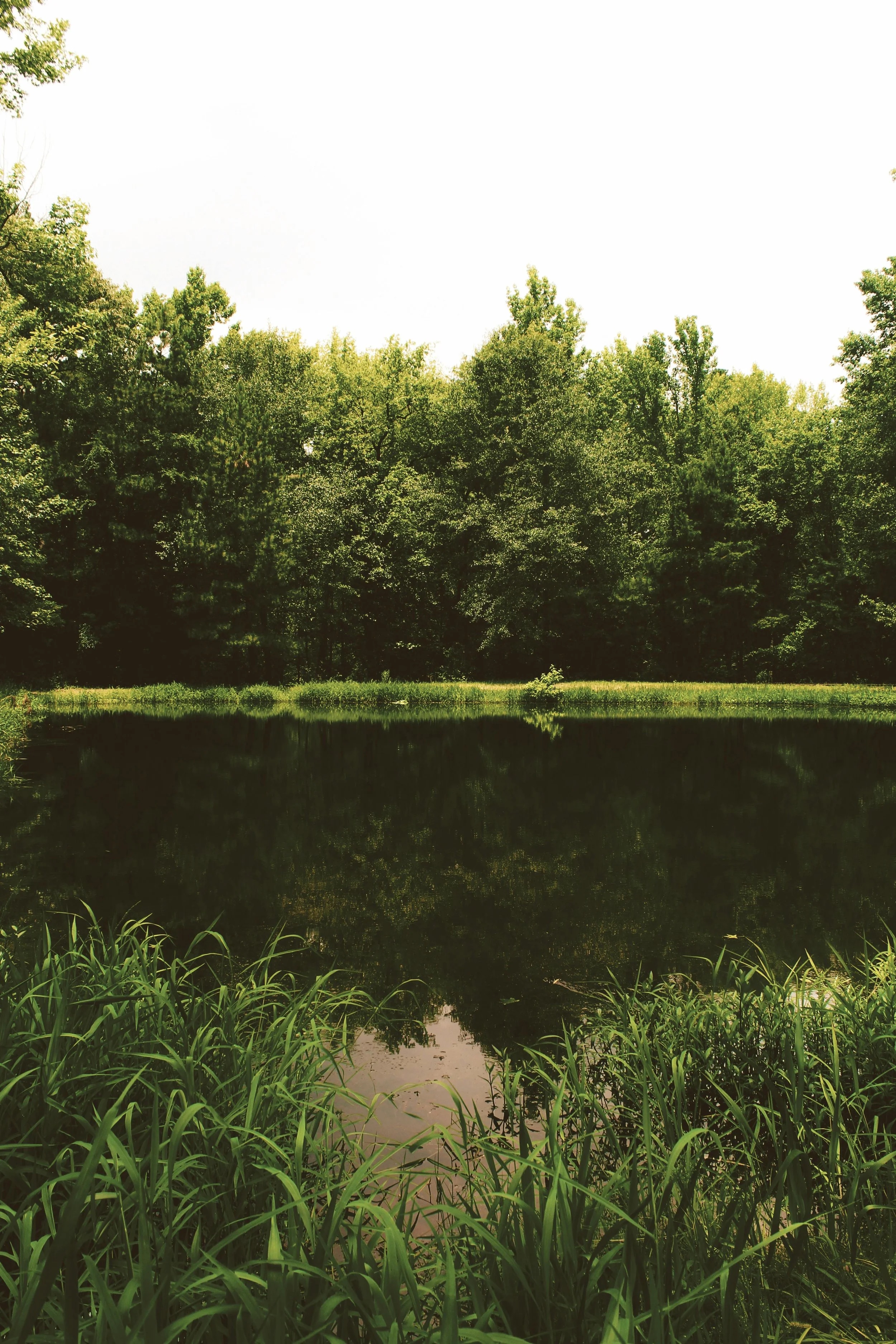
To stop a retention pond bank from washing away, rebuild the bank where the pond has taken it and protect the edge so waves and runoff can no longer pull soil out of it. The right way to do that depends on the site. We’re an agnostic stormwater solutions company, so we start with a needs assessment and recommend what fits the pond’s rules, budget and conditions, such as a vegetated geotextile system like ShoreMesh, riprap, regrading or bioengineered plantings. Act early: every heavy rain takes more ground, and the longer it runs, the bigger and more expensive the repair.
How do you stop a retention pond bank from washing away?
Two things have to happen. First, the ground the pond has already taken has to come back, because a bank that has been undercut or has slumped will keep falling in. Second, the new edge has to be protected so the same forces cannot strip it again. Planting grass on a bare, undercut face or dumping fill against it does neither for long: fill placed on the bank with nothing to hold it is exposed to the same waves and runoff that took the original soil.
A repair that lasts rebuilds the bank and gives it something to hold onto at the waterline, then lets roots finish the job.
Why do retention pond banks wash away?
Most pond banks fail slowly, in the same few ways:
- Waves at the waterline. Wind and waves work at the toe of the bank, cutting under it until the top slumps into the pond.
- Runoff over the top. Stormwater that pours over the top of the bank instead of reaching the pond through an inlet cuts gullies down the face.
- Changing water levels. A retention pond rises after storms and drops in dry spells, so a band of bank is wetted and dried again and again.
- Bare soil. Where roots are missing, there is nothing holding the soil together when water reaches it.
The signs are easy to spot once you look for them: undercut or slumping banks and exposed roots, lost turf, cart paths or yards creeping toward the water, muddy water and sediment building up in the pond, and riprap that has shifted, sunk or washed out.
One option: rebuilding the bank with ShoreMesh
When ShoreMesh suits the site, we rebuild the lost ground with fill and vegetation and hold it in place like this:
- We fold the ShoreMesh in half and set at least 2 feet of it under the toe of the bank.
- We fill behind it to rebuild the ground the pond has taken.
- We finish the top with vegetation, which roots through the mesh into the soil underneath.
High density polyethylene does not rot and does not soak up water. The open knit lets water drain through while it holds the fill behind it, so the finished bank is held by the mesh and the vegetation together. We pick the width for each bank based on its height and the land you want back, and most projects gain 1 to 4 feet of bank.
We drop the fill at a staging area and move it to the shoreline with a small utility cart, so no truck or heavy equipment needs to reach the water’s edge. If your crew or landscaper would rather handle the vegetation, that is common, and it is something we plan together.
ShoreMesh is made for still water: retention ponds, stormwater ponds, golf course ponds and lakes. It is not for rivers, streams or moving water, and where it isn’t the right fit we recommend another approach.
Is riprap a better way to stop a pond bank washing away?
Both stop erosion, and the right one depends on the site. Riprap needs trucks and heavy equipment to place the stone, gives back no lost ground, and can shift, sink or wash out over time. A geotextile system with fill and vegetation can win back the ground the pond has taken and looks like part of the property once the vegetation grows in. We compare the two in riprap or geotextile for a pond bank.
Is an eroding pond bank a stormwater compliance problem?
Often, yes. An eroding bank can reduce how a stormwater pond performs, and sediment from the bank ends up in the pond. In South Carolina, Regulation 72-308 puts upkeep of a permitted pond on the landowner and its successors, including homeowners associations. Your permit, the recorded maintenance agreement and your local ordinance set how often the pond must be inspected; as a baseline, Clemson Extension recommends inspecting stormwater ponds at least twice a year and after large storms. Read who is responsible for an HOA stormwater pond in South Carolina for more.
Do you need an inspection before the repair?
No. We recommend an inspection before repairs, because it shows how the whole pond is doing and helps plan the repair, but it is not required. We can quote an erosion repair directly. If you want one, see our BMP inspections.
What does it cost to fix a washed out pond bank?
For standard pond banks under 5 feet tall, repair runs about $120 to $150 per linear foot on jobs under 500 linear feet, and lower per foot on bigger jobs. Bank height, the land you want back, fill and vegetation, cart access and total footage move the price. For a budget range on your own bank, use our erosion price estimate.
Get started
Tell us about the bank and we will call you for a free needs assessment, then send a clear quote. Photos help, and you can email them after. See pond bank erosion repair, get a quote, or call (843) 606-6711.
Need help with this on your property? See our pond bank erosion repair services, or request a free needs assessment call.