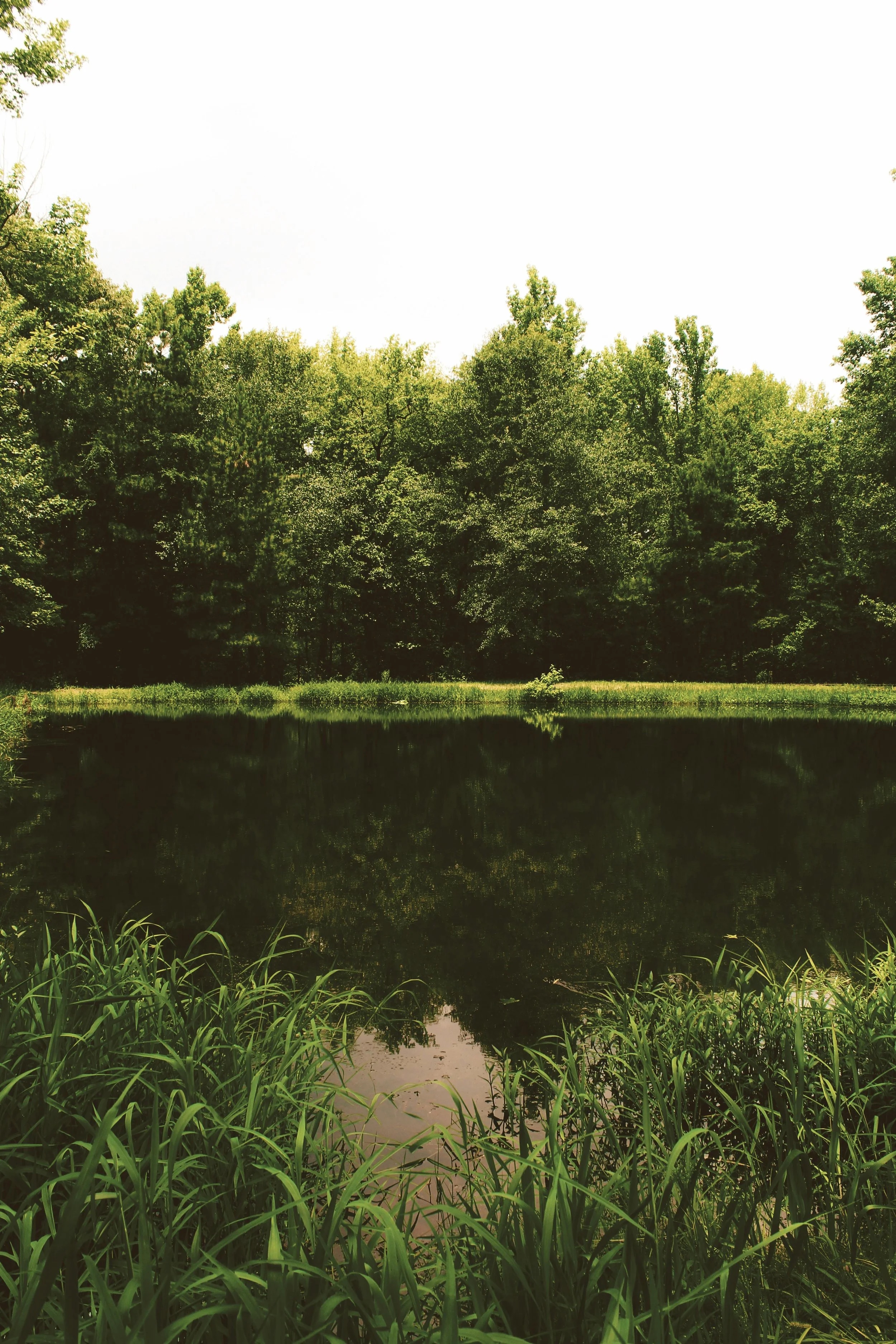
Pond bank and shoreline erosion
Get a price range for your eroding bank
Answer a few questions about your bank and we will show you a budget range for repairing it with ShoreMesh. We walk you through every measurement. It takes about 10 minutes and a measuring wheel or tape helps.
1. How long is the eroding bank?
We need the length of bank you want repaired, in feet, measured along the top edge of the bank from one end of the damage to the other.
Three ways to measure
- Measuring wheel (best): roll it along the top of the bank from where the erosion starts to where it stops.
- Long tape: measure in sections and add them up.
- Google Maps: on a computer, right click the start of the eroding bank, choose “Measure distance”, then click along the shoreline to the end. The total shows at the bottom.
- Pacing: walk it at a normal stride and count steps. One step is about 2.5 feet.
2. How tall is the bank?
This is the bank height, sometimes called the escarpment: the straight up and down distance from the top of the bank to the shelf at the bottom, where our system will rest.
How to measure it
- Stand a straight pole, rake handle or board on the shelf at the bottom of the bank, right against the bank.
- Measure on the pole from the shelf up to the top of the bank. That is your bank height.
- If the shelf is under water, push the pole down until it stops on firm bottom near the bank and measure from there.
- If the height changes along the bank, use a typical (average) height. Most banks we repair are 1 to 6 feet.
3. How much land do you want back?
Land gain is how far out from today’s eroded edge you want the new bank to be. We fill behind the ShoreMesh to rebuild the ground the pond has taken.
- Many owners take back what the pond has eaten: look for old edging, a fence line, a cart path or the neighbor’s bank to see where the edge used to be.
- If you only want to stop the erosion where it is, enter 1 foot.
- Most projects gain 1 to 4 feet. More gain means more fill.
4. Fill and vegetation
The rebuilt bank is filled and finished with vegetation, which grows through the ShoreMesh and locks the bank in place.
5. Getting fill to the eroded shoreline
We drop the fill at a staging area and shuttle it to the eroded shoreline with a small utility cart, such as a Toro Workman. No truck needs to reach the shoreline.
The staging area is an open spot where a dump truck can drop fill, such as a parking lot, maintenance yard or the end of a street. Pace it off or estimate it.
6. Where should we send your estimate?
Enter your details to see your price range. A member of our team will reach out to go over your answers and set up a formal quote.
Your budget range
Want to talk sooner? Call us at (843) 259-2097.