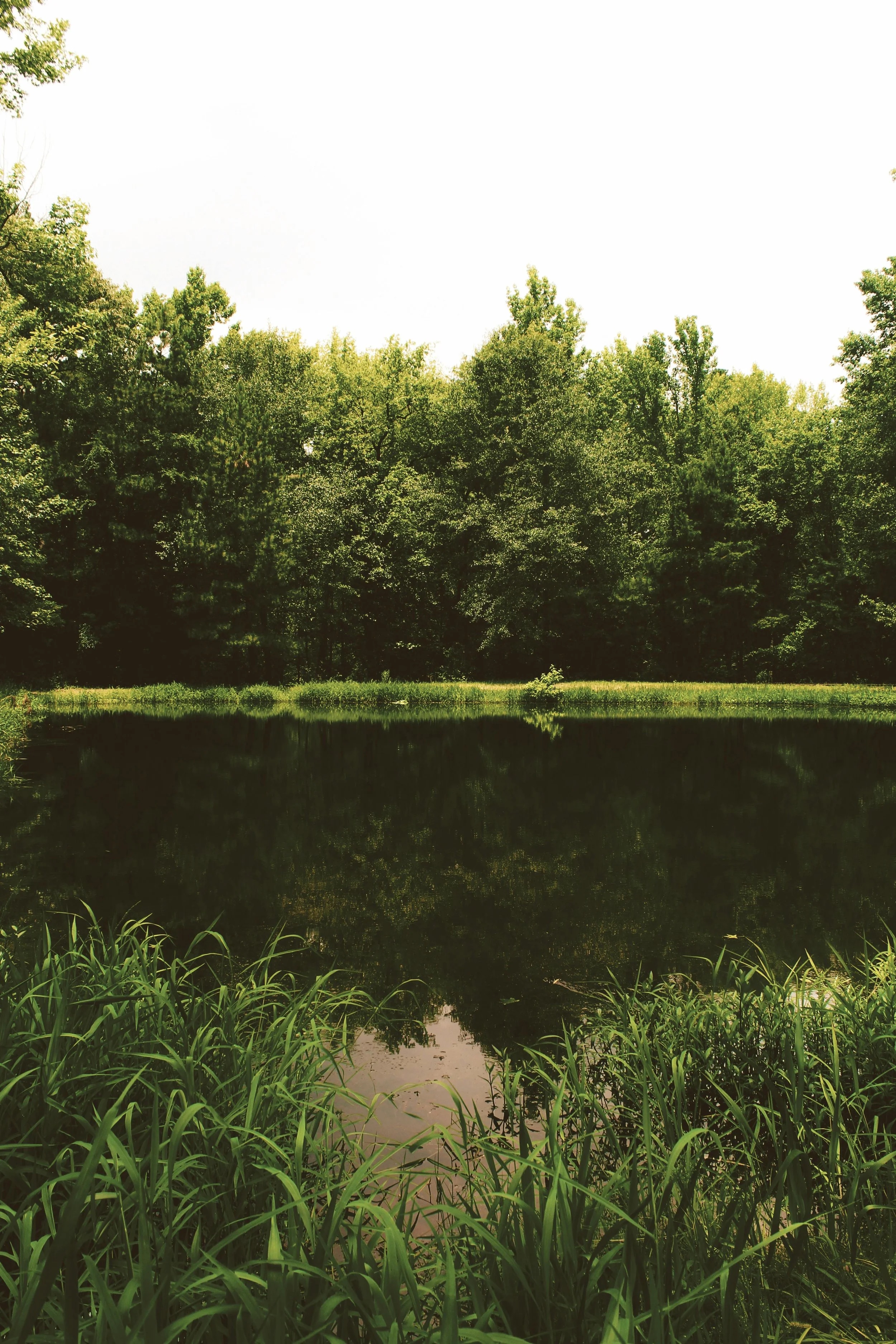
You can repair a steep pond bank without heavy equipment by bringing the materials to the bank in small loads instead of bringing machines to it. We drop the fill at a staging area, such as a parking lot, maintenance yard or the end of a street, and move it to the eroded shoreline with a small utility cart. Then we rebuild the bank with the system that fits the site, such as ShoreMesh, a knitted HDPE geotextile, with fill and vegetation, so no truck or heavy equipment goes on the bank. We recommend the system after a needs assessment.
Can you repair a steep pond bank without heavy equipment?
Yes. Most of the work in a pond bank repair is moving fill to the water’s edge and placing it behind something that will hold it. Neither step needs a machine on the bank. What it needs is a place to drop the fill, a route for a utility cart, and a system that holds the rebuilt ground at the waterline.
That matters because many eroding banks have no room for heavy equipment. Homes, landscaping, greens or tees often sit between the nearest road and the water, and an undercut or slumping bank is the last place to put a heavy load.
How a ShoreMesh repair works
- Staging area. The fill is delivered to a spot a truck can reach: a parking lot, maintenance yard or the end of a street.
- Cart to the shoreline. We shuttle the fill to the eroded bank with a small utility cart. On golf courses that can be a cart such as a Toro Workman.
- ShoreMesh at the toe. We fold the ShoreMesh in half and set at least 2 feet of it under the toe of the bank.
- Fill behind the mesh. We fill behind it to rebuild the ground the pond has taken.
- Vegetation on top. We finish with vegetation, which roots through the mesh into the soil underneath.
High density polyethylene does not rot and does not soak up water. The open knit lets water drain through while it holds the fill, so the finished bank is held by the mesh and the vegetation together. We pick the width for each bank based on its height and the land you want back.
What if a utility cart cannot reach the shoreline?
Where a utility cart cannot reach the shoreline, the fill may need to be carried or moved another way. Our team will talk through how that affects the price on the needs assessment call. The more you can tell us about access, the better: where a truck can stop, what sits between there and the water, and any gates, slopes or soft ground on the way.
Why not riprap on a steep bank?
Riprap is a layer of heavy stone over the bank face, and it needs trucks and heavy equipment to place the stone. It also gives back no lost ground. A geotextile system with fill and vegetation can win back the ground the pond has taken and goes in without heavy equipment on the bank. Where riprap is already in place and has moved, we can refurbish it. The right choice depends on the site, and we recommend it after the needs assessment. For the full comparison, read riprap or geotextile for a pond bank.
Which banks is this method for?
ShoreMesh is made for still water: retention ponds, stormwater ponds, golf course ponds and lakes. It is not for rivers, streams or moving water, and where it isn’t the right fit we recommend another approach after the needs assessment.
Every bank is different, so we do not set a rule of thumb for how steep is too steep. Tell us the height of the bank, how far the top has moved back, and what sits near the edge. Photos help a lot. On the needs assessment call we work out what the bank needs and how we would get the materials to it.
Will the work disrupt residents or play?
Keeping trucks off the bank keeps the disruption small. We plan around residents, play and access, and keep the work area tidy. On golf courses, the work is planned around play, and many crews prefer to handle the turf and vegetation themselves, which we plan together.
Do you need an inspection first?
No. We recommend an inspection before repairs, because it shows how the whole pond is doing and helps plan the repair, but it is not required, and we can quote an erosion repair directly. If you want one, see our BMP inspections.
What does it cost?
For standard pond banks under 5 feet tall, repair runs about $120 to $150 per linear foot on jobs under 500 linear feet, and lower per foot on bigger jobs. Bank height, the land you want back, fill and vegetation, cart access and total footage move the price. For a budget range on your own bank, use our erosion price estimate.
Get started
Tell us about the bank and we will call you for a free needs assessment, then send a clear quote. See pond bank erosion repair, get a quote, or call (843) 606-6711.
Need help with this on your property? See our pond bank erosion repair services, or request a free needs assessment call.