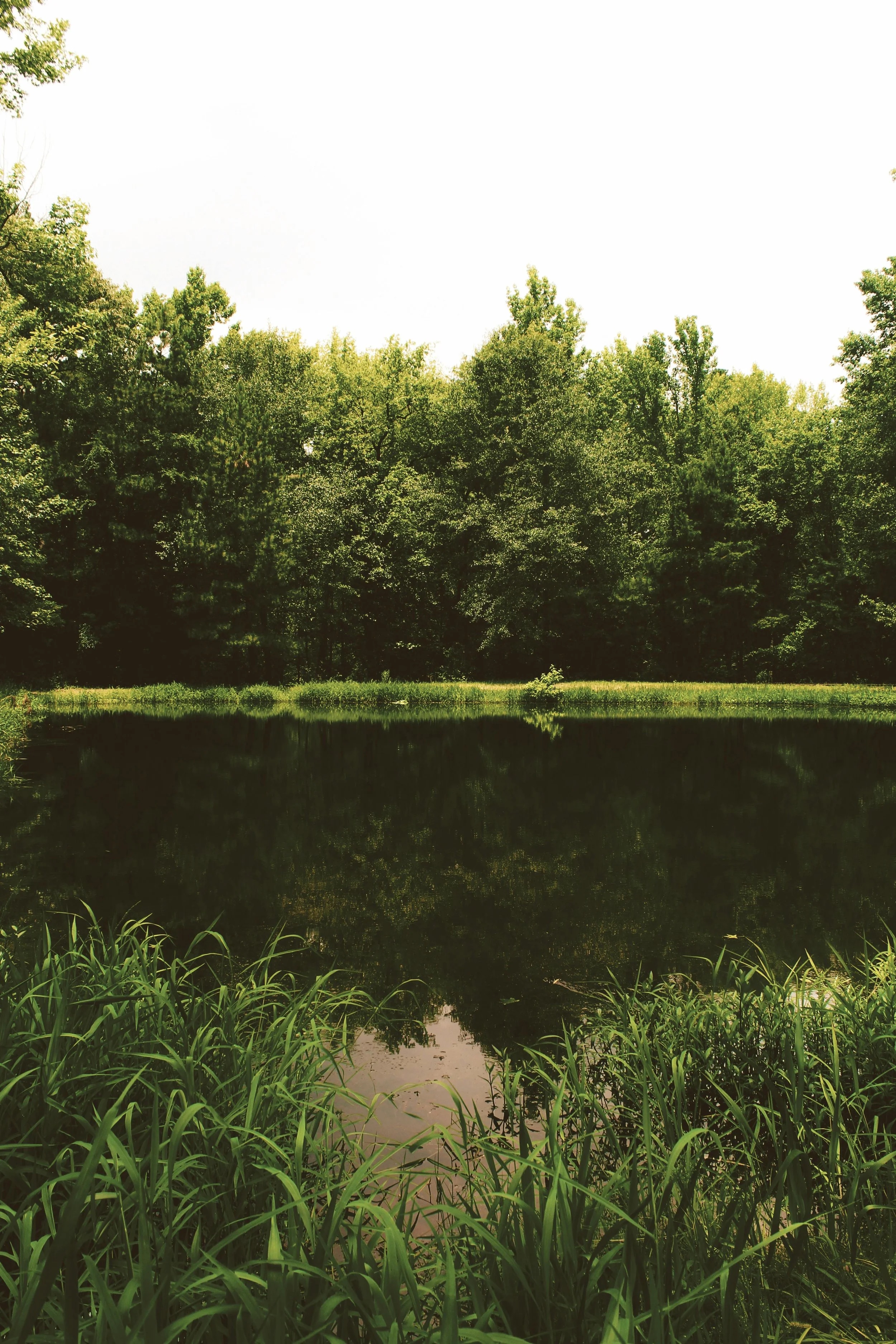
Short answer: most HOA pond maintenance plans cover the water: algae, aeration, weeds and clarity. Many community ponds are also stormwater systems, and those need a second kind of care: the banks, the inlets and outlets, the pipes, and a record of inspections that matches the property’s approved plans and maintenance agreement. Boards that only budget for the water often meet the rest as an emergency.
This guide is for HOA boards, community managers and property managers who want the whole picture.
Two kinds of pond maintenance
Water quality. Algae control, aeration, aquatic weeds and fish. This is what most lake management companies sell, and it matters to residents.
Structure and function. Does the pond still hold and move water the way it was designed to? Are the banks holding? Are the inlets, outlet structure, pipes and outfalls clear and intact? Does the paperwork show it?
A clear pond can still have a failing bank or a blocked outlet. The second list is where the large, unplanned bills tend to come from.

What to check on an HOA stormwater pond
Walk it the way water moves: from where it comes in, through the pond, to where it leaves and what it reaches downstream.
- Inflows. Inlets, pipes and swales feeding the pond. Look for sediment piles, broken pipe ends and undercut ground around them.
- Banks. Look for steep cut edges, exposed roots, leaning fences, sinking turf near the water and backyards that seem to be moving toward the pond.
- Outlet structure. Trash, debris or vegetation blocking it, damage to the structure, standing water where it shouldn’t be.
- Outfalls and downstream. Erosion at the discharge point and anything that suggests water isn’t leaving the way it should.
- The rest of the system. Swales, level spreaders, filter strips, pervious pavers and water quality units are often part of the same permitted system and need the same attention.
Take photos each time, from the same spots. Comparison photos are the easiest way to show a board that a bank has moved.
Who is responsible
The obligation usually sits in the community’s own documents: the approved plans, the recorded maintenance agreement and any local reporting rules. Those documents say what the HOA must keep up and how often it must be inspected.
If your board doesn’t have copies, finding them is the first step. An inspection checked against those documents is far more useful than a general look.

How an inspection helps the board budget
Ei inspects stormwater BMPs using the Clemson Cooperative Extension post construction BMP inspection checklists, checked against the property’s approved plans and recorded maintenance agreement. Ei is Clemson certified for post construction BMP inspection.
What the board gets:
- One plain English report for the community.
- Every BMP photographed, with deficiencies shown close up and in context.
- A rating for each one: fully functional, minor functional issues, partially functional or not functional.
- Findings, corrective actions and priorities, so the board knows what to fix first.
- The next due date recorded, with reminders about 60 and 30 days before it.
- Anything inaccessible or unverified named as such, not guessed.
An inspection is recommended before repairs, not required. It lets the board plan repairs into the reserve budget instead of reacting to a violation or a collapse. Inspections are quoted per site, based on the number and type of BMPs. See our guide to [link: BMP Inspections: What HOA Boards, Property Managers and Golf Courses Need to Know].
When the banks are the problem
Bank erosion on a community pond is common, and it rarely fixes itself. Lost ground near homes, fences and walking paths is what usually gets the board’s attention.
There are several ways to stabilize a pond bank, from geotextile systems with fill and vegetation to a bulkhead where a hard structure is the better fit. ShoreMesh is one of the options for still water ponds and lakes. The right choice depends on the property’s regulatory, budgetary and environmental limits, which is why Ei starts with a needs assessment rather than a product.
For budgeting: standard pond banks under 5 ft tall run about $120 to $150 per linear foot on jobs under 500 LF, lower per foot with volume. Taller banks and larger or more complex jobs are quoted per site.
Repairs can be scoped, priced and phased so the worst sections are done first and the rest later. Repair quotes are always available, with or without an inspection first. More on methods: [link: Ei shoreline stabilization service page].
A simple plan for the board
- Find the documents. Approved plans, maintenance agreement, prior inspection reports.
- Split the budget. One line for water quality, one for structure and function.
- Inspect. Get a report that ranks what needs work.
- Phase the repairs. Fix the worst first and plan the rest into reserves.
- Keep the dates. Record the next inspection due date and keep the photos for comparison.
When another firm fits better
Ei is a stormwater solutions company, not a water treatment service. If your pond’s main issue is algae or aeration, Ei will say so and can point you to a firm in its network that handles it. If it is banks, outlets, pipes or inspections, that is the work Ei does.
Next step
Send a few photos of the areas of concern, or tell us which ponds and we can look from satellite. The first step is a free needs assessment call to understand your property, your documents and your budget. Ei is based in Charleston, SC. We work with HOAs across South Carolina. Call (843) 606-6711.
[link: contact page]