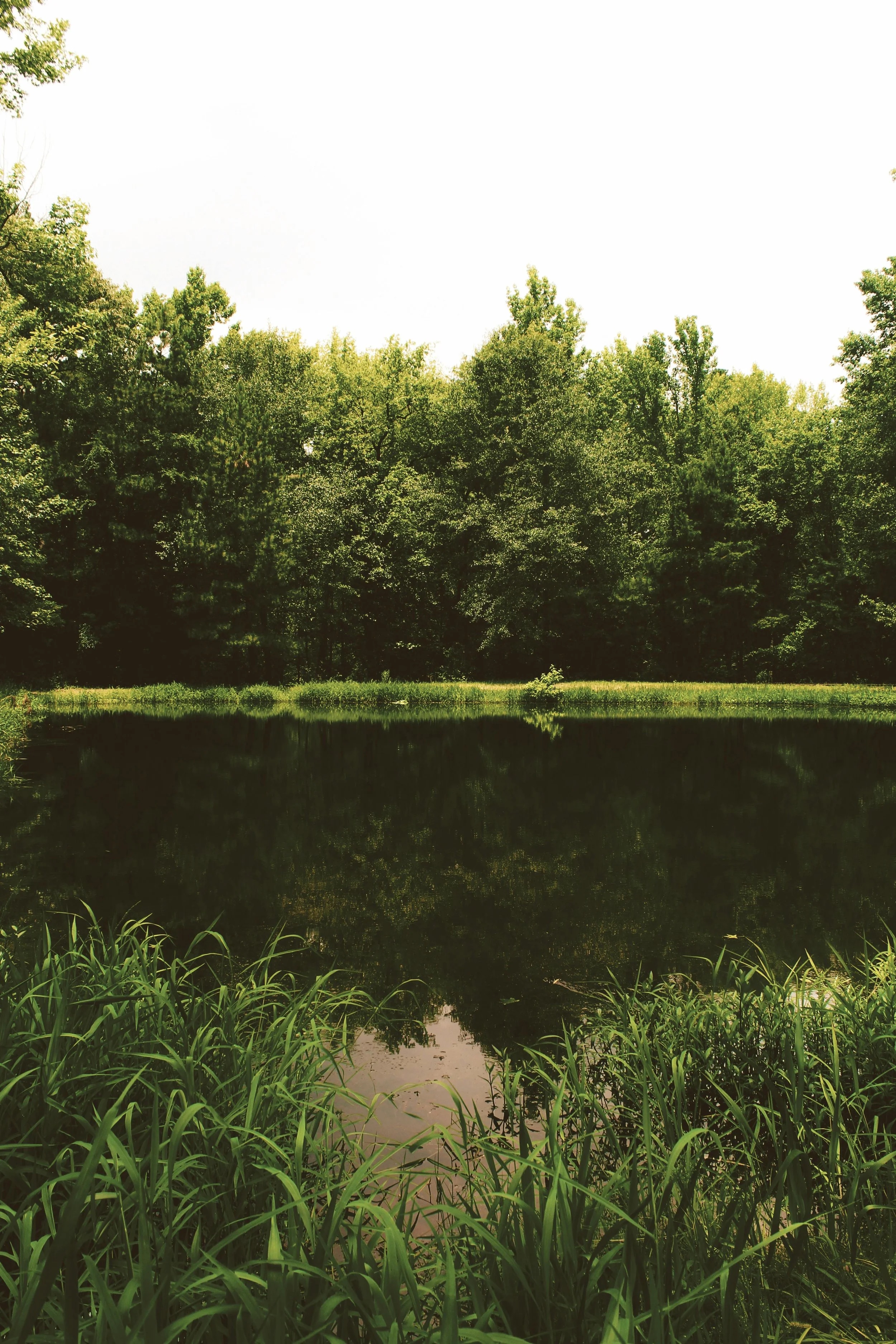
Most golf course shoreline erosion happens the same way. Water works at the toe of a pond or lake bank until the soil caves, and the bank turns into a vertical drop. Turf hangs over the edge, carts and mowers can’t get close, and the pond slowly fills with the soil it took.
The fix comes down to three questions. Is the water still or moving? How tall is the drop? How many linear feet need work? Answer those and the right method usually picks itself.
What erosion looks like on a course
Watch for these signs on pond and lake banks:
- A vertical cut at the waterline, often with roots and turf hanging over it
- Bank edges that move back a little every season
- Cloudy water or new sediment bars after storms
- Mowing lines pulled back from the edge because it isn’t safe
- Cart paths, tee boxes or green slopes creeping toward the water
The sooner a bank is held, the less fill it takes to rebuild. A small drop is a much smaller job than one that has been left for several seasons.

The main methods
Bulkheads and walls. A structural wall holds a hard line at the water. It is a heavy build, and it changes the look of the hole. It makes sense where a structure has to sit right at the edge.
Stone. Rock armors the bank against waves. It is heavy to place, hard to mow around, and it gives the pond a different look than turf down to the water.
Plantings on their own. Vegetation helps hold soil, but on a bank that is already cut back, plants alone rarely stop the water from working at the toe.
Geotextile systems. A geotextile holds the toe of the bank, and the bank is rebuilt behind it with fill and vegetation. This is the approach Ei uses on pond banks, with ShoreMesh, Ei’s own geotextile. The finished bank reads as turf to the waterline rather than a wall or a rock line.
Still water or moving water
This is the first thing to settle. ShoreMesh is built for still water: ponds and lakes. It is not for rivers, creeks or any bank with real current.
Streams and creeks running through a course are a design job of their own. How much energy flows through the channel, and whether it flash floods, decides what will hold. If your problem is a creek bank, say so up front and the scope starts there.

What sets the scope
Every shoreline job is quoted per site. These are the things that move the number:
- Linear feet. The length of bank that needs work. This is the one figure that has to come from you or from the site.
- Escarpment height. How tall the drop is from the top of the bank to the water.
- Land gain. How far you want the edge brought back out toward where it used to be.
- Fill and vegetation. Whether the contractor supplies and places them, or your course does.
- Access. How equipment and material reach each bank without damaging play areas.
- Timing. Install time depends on the length of bank, access and the season. We set the schedule with the superintendent before work starts so it fits around play.
Using your own crew
Many superintendents have staff, equipment and a fill source on site already. That can take real cost out of a shoreline job.
Ei offers a turnkey install, where Ei supplies the fill and vegetation. It also offers a split scope, where the course is responsible for:
- Providing the fill
- Staging the fill and moving it to each bank
- Providing and installing the vegetation
Ei installs the system and rebuilds the bank, and your crew handles the rest. Tell us early which parts your team wants to take on, and the proposal is built that way.
Where a stormwater inspection fits
Many course ponds are permitted stormwater ponds. If yours are, the eroding bank may be one item on a longer list: inlets, pipes, outfalls and sediment building up in the pond.
We recommend a BMP inspection before larger repairs on permitted ponds, because it shows what is working, what isn’t and what to fix first. It is a recommendation, not a requirement. A shoreline quote doesn’t depend on it. Ei’s inspections are done by a Clemson certified inspector and follow the Clemson Cooperative Extension post construction BMP checklists. See our post on BMP inspections for HOA boards, property managers and golf courses for the details.
How to get a number
You don’t need a site visit to start. Send photos of the banks that concern you and tell us which ponds they are. We measure the shoreline from satellite imagery and prepare a budgetary quote from there.
Two questions help us scope it faster:
- Is the bank on a still pond or lake, or on a creek with current?
- Does your crew want to handle fill and vegetation, or do you want it turnkey?
Call (843) 606-6711 or send your photos through the contact form. Ei is based in North Charleston, SC, and works on golf courses across South Carolina, North Carolina, Georgia, Florida and Virginia, and farther afield.
[Link suggestion: Ei shoreline stabilization and ShoreMesh service page, plus the BMP inspections post.]